


Publish date: 2025-12-26
In precision manufacturing, a seemingly simple aluminum part often goes through more than a dozen processes before delivery. Many people assume anodizing is just “soaking the aluminum part in an electrolyte,” but that’s far from the truth — high-end anodizing applications require a highly coordinated, tightly linked manufacturing system.
As a professional provider of advanced materials and application solutions, Companion is equipped with state-of-the-art production lines and equipment. In anodizing surface treatment, we can process multiple materials such as aluminum, titanium, and magnesium alloys, and provide a range of process types, including standard anodizing, hard anodizing, oxalic acid anodizing, and mixed-acid anodizing.
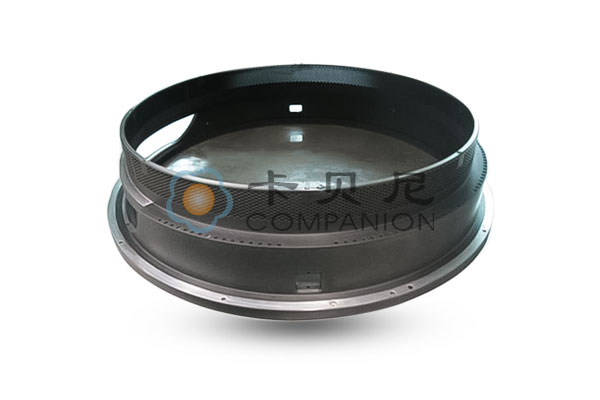 |
|
Aluminum oxide film regeneration |
Anodizing is an electrochemical surface treatment process. By applying direct current to aluminum and aluminum alloys in a specific electrolyte (such as sulfuric acid or oxalic acid), a dense aluminum oxide (Al₂O₃) layer is formed in situ on the surface. This oxide film is integrally grown from the base material. It improves corrosion resistance, wear resistance, and insulation performance, and can also achieve rich and durable appearances through dyeing. Whether it’s natural-finish anodized housings for consumer electronics or hard-anodized parts for industrial equipment, they rely on this mature anodizing surface treatment technology.
At Companion, we understand that process rigor directly determines product quality. Today, let’s take a look at the key steps a high-quality aluminum alloy anodized product goes through — from inbound to shipment.
Whether using standard anodizing, oxalic acid anodizing, hard anodizing, or mixed-acid anodizing, pretreatment is the baseline for all methods. Even the most minor oil stain or oxide residue can lead to film defects. Standard pretreatment includes the following key steps:
(1) Racking: Depending on part geometry and conductivity requirements, we select aluminum alloy or titanium alloy racks — the former provides better conductivity but may have limited stability after repeated use. At the same time, the latter costs more but offers better corrosion resistance and longer service life. We customize dedicated racking for each part to ensure uniform current distribution and reliable fixturing.
(2) Masking: Areas that should not be treated (such as threaded holes and electrical contact surfaces) are physically covered with acid/alkali-resistant tapes, plugs, or peelable coatings to ensure oxidation occurs only in specified areas.
(3) Degreasing: Aluminum parts typically have two types of contaminants: machining/cutting oils and oily residues from fingerprints or dust adhesion. We use alkaline cleaners combined with ultrasonic agitation to break down reactive oils and “encapsulate and carry away” insoluble droplets, achieving thorough surface cleaning. If degreasing is insufficient, the anodic film may show localized poor oxidation and mottled “staining” defects.
(4) Alkaline etching: Alkaline etching is often used for surface stripping and preparation. The aluminum is immersed in an alkaline solution primarily based on sodium hydroxide (NaOH) to remove residual contamination and lightly etch the native oxide layer, exposing clean metal substrate. This lays the foundation for uniform conductivity and uniform anodic film formation, and helps avoid darkening caused by improper etching. This step directly affects the surface appearance of natural (undyed) anodizing.
(5) Chemical polishing: Electropolishing is an electrochemical “self-leveling” process for metal surfaces. Simply put, when current is applied, micro-peaks dissolve preferentially while valleys dissolve more slowly. At the same time, the electrolyte forms a dynamic protective layer that further supports the process of “removing highs and filling lows.” The result is a smooth, bright mirror finish that provides a more uniform base for subsequent anodizing.
(6) Neutralization: A dilute nitric acid solution is used to remove alloy impurities precipitated during alkaline etching or chemical polishing (often referred to as “black smut removal”). It also effectively neutralizes residual alkali, providing a clean, active metal surface for the oxidation process and preventing bath contamination.
Based on years of anodizing experience, we have developed mature and stable pretreatment parameter sets for different aluminum grades and product requirements. By precisely controlling key parameters, we reduce process variation and ensure highly consistent surface results in mass production.
This is the most critical stage of the anodizing process — film performance, color, and functionality are finalized here.
(1) Anodizing: In the electrolytic tank, the aluminum part serves as the anode. Under direct current, a dense aluminum oxide (Al₂O₃) film forms in situ on the surface. Depending on product requirements, Companion offers the following main anodizing surface treatment categories:

Oxide film repair & regeneration
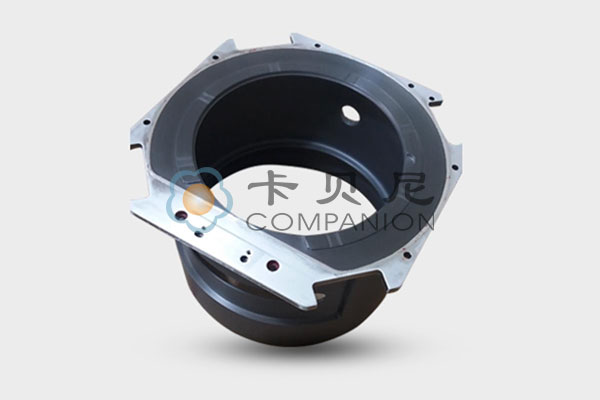
Hard anodizing
(2) Dyeing: After anodizing, the aluminum surface has a porosity of about 20%–30%, with high chemical activity and surface area, which enables dye adsorption and color development. To achieve uniform and durable coloration, three conditions must be met:
If any step is out of control, it may cause color difference, fading, or batch inconsistency.
(3) Sealing: The core mechanism of sealing is the hydration reaction of aluminum oxide (Al₂O₃) at elevated temperature, which causes the film to expand in volume and effectively close the micro-pores. This turns the surface from a “porous state” into a “dense state,” firmly locking in the color and effectively blocking corrosive media.
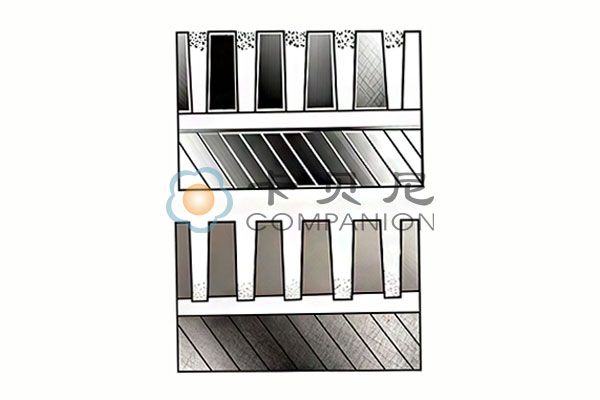 |
|
Aluminum oxide film regeneration |
Sealing is not the end. The following steps are completed in sequence to ensure surface treatment quality meets standards, and the part is truly “finished”:
(1) Desmutting: After sealing, a small amount of white powdery residue (commonly called “smut” in the industry) may precipitate on the surface. A mild acid wash can thoroughly remove these impurities and ensure surface cleanliness.
(2) Ultrasonic water rinsing: With high-frequency vibration, residual ionic impurities inside the oxide micro-pores are removed more thoroughly, reducing the risk of “white spot” defects during later use.
(3) Drying: Hot-air drying is used at a controlled temperature to ensure complete drying, effectively preventing water marks that may affect appearance and performance.
(4) Unracking & 100% inspection: After removing parts from the rack, comprehensive quality inspection is performed. Key checks include oxide film thickness, color difference, adhesion, and insulation performance to ensure no quality risks.
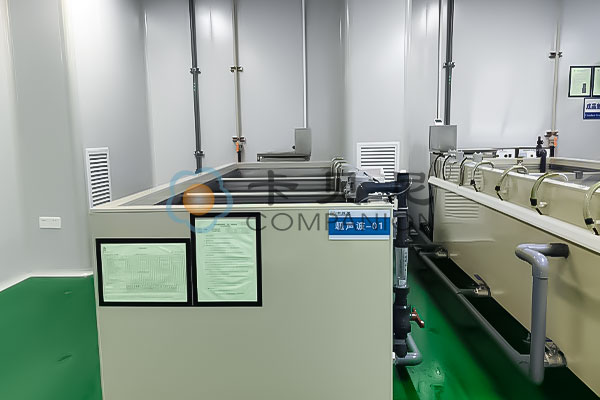
(5) Precision cleaning: Using high-purity deionized water combined with ultrasonic cleaning, residual ions and contaminants in the micro-pores and on the surface are removed effectively, reducing risks of white spots, precipitation, or corrosion, and meeting high-cleanliness requirements.
(6) Vacuum clean packaging: Performed in a cleanroom. Vacuum-sealed packaging is used as needed to isolate air, moisture, and particles, thereby preventing oxidation, moisture uptake, and scratches during transportation — an ideal solution for high-end fields such as electronics engineering.
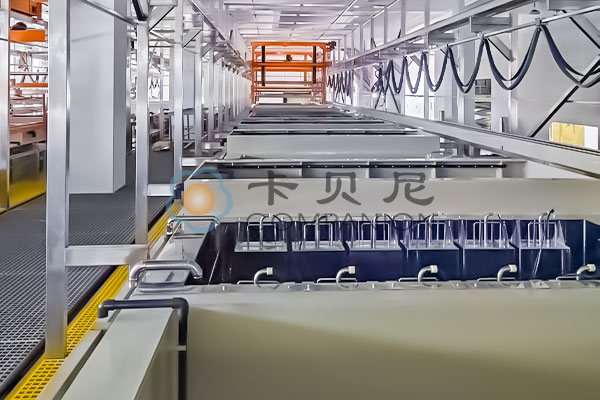 |
 |
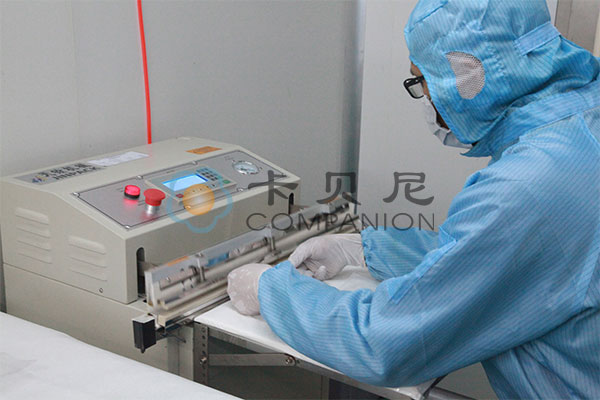 |
| Anodizing line | Precision cleaning | Vacuum clean packaging |
Anodizing is not “done and finished” — it only works when it’s “controlled precisely.” Once you understand the processing steps behind it, you’ll see why choosing an experienced anodizing supplier with integrated capabilities (substrate machining, surface treatment, and precision cleaning) is far more important than simply comparing anodizing service prices.
Are you facing issues such as color variation, uneven film thickness, or batch fluctuation? Feel free to leave a message with ‘Inquiry + Material + Application’. We’ll provide sample support and a customized process solution to help you move into mass production.






 LANGUAGE
 WhatsApp