


Publish date: 2026-06-05
In electronic engineering and precision manufacturing, workpieces are increasingly trending toward higher precision, larger dimensions and thinner profiles. To ensure stability and consistency during processing, the performance of holding and support systems is drawing growing attention. Against this backdrop, porous ceramics — as a material that integrates structural and functional properties — are being adopted in a wide range of precision holding platforms and fixturing devices.
Through their unique micropore structure, porous ceramics provide a uniform and stable holding foundation for electronic material processing, playing an important role across many electronic engineering application scenarios.
Porous ceramics are ceramic materials containing an interconnected pore structure. Through specific material design and sintering processes, a uniformly distributed micropore network is formed inside the material, allowing gas to flow through the internal structure.
When porous ceramics are connected to a vacuum system, airflow is evenly distributed through the internal micropores, creating a stable holding area across the surface and providing full-surface support for electronic materials. This holding method helps reduce localized stress on the workpiece, making it suitable for processing scenarios that demand high flatness and stability.
In electronic engineering, porous ceramics are commonly used to manufacture porous ceramic vacuum chucks, porous ceramic holding platforms and various precision support structures.
(1) Uniform Holding Force Distribution
The uniformly distributed interconnected pore structure of porous ceramics promotes even gas diffusion, resulting in a more stable holding force distribution across the platform surface. This characteristic helps improve workpiece positional stability during processing or inspection and enhances thickness uniformity metrics.
(2) Good Structural Stability
Porous ceramic materials maintain dimensional stability within a given temperature range, making them suitable for electronic engineering environments with demanding dimensional control requirements.
(3) Controllable Electrical Insulation
Porous ceramics can be tailored to adjust their electrical insulation characteristics based on process needs, providing a stable electrical environment during electronic component processing.
(4) Corrosion and Wear Resistance
In certain electronic manufacturing processes, the environment may involve exposure to gases or materials. Porous ceramics offer good chemical stability and wear resistance, contributing to extended service life.
(5) Cleanroom Compatibility
Under proper design and processing conditions, porous ceramics can meet the cleanliness requirements of electronic engineering, making them suitable for applications where particle contamination control is a concern.
(1) Precision Sheet Holding Platforms
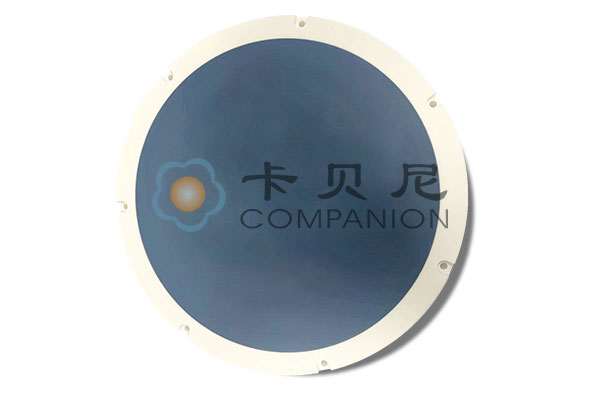
In inspection, surface treatment and fine processing operations, thin functional sheets generally require a certain level of platform flatness and holding uniformity. Leveraging their interconnected micropore structure, porous ceramics can form a relatively uniform holding area when connected to a vacuum system, making them suitable for related carrying applications. Companion can participate in the design, processing and integration of porous ceramic holding platform components based on equipment structure and service conditions.
 |
(2) Glass Substrate Holding Fixtures
For large-area thin materials such as glass substrates, porous ceramic stages leverage their structural stability and uniform holding force to help mitigate minor deformation or vibration during processing. Companion has capabilities in large-format porous ceramic stage fabrication, assembly and post-processing, and can supply corresponding structural components based on actual application needs.
(3) Vacuum Carrying Components and Custom Stages
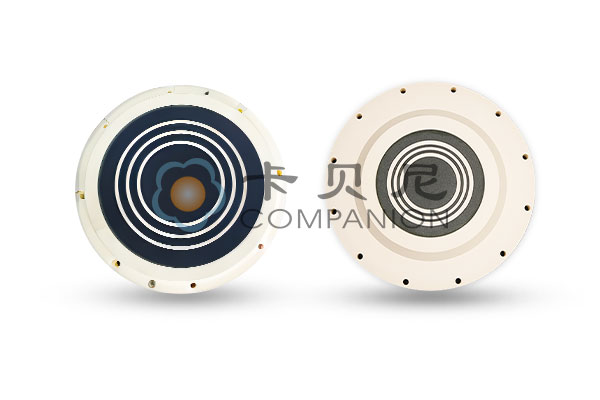
In precision electronic assembly processes, vacuum chucks are not merely fixturing tools but key components of the core system. Companion can work alongside customers to advance problem-solving and custom development of porous ceramic vacuum stages based on different equipment interfaces and on-site process environments. For the holding of irregularly shaped components or special chemical resistance needs, we can engage in the design, R&D and manufacturing of customized components, and collaborate with customers on application validation and solution evaluation under real-world operating conditions.
 |
(1) Material Design and Process Control
Based on different application requirements, Companion can formulate, design and optimize porous ceramic materials, balancing permeability with mechanical strength to suit a variety of electronic engineering environments.
(2) Forming and Sintering Technology
Through the control of forming and sintering processes, Companion achieves uniform pore structure distribution and improves overall material consistency.
(3) Precision Machining Capabilities
Building on material preparation, precision machining techniques are applied to surface-grind and structurally finish porous ceramic platforms to meet equipment installation and operational requirements.
(4) Structural Adaptation and Custom Support
For different equipment interfaces and installation configurations, Companion can adjust the dimensions and perform supporting processing on porous ceramic components based on customer-provided structural designs. Product forms are typically designed and confirmed in conjunction with the actual application scenario.
As electronics manufacturing pursues ever-higher precision, porous ceramics, with their uniform holding and stable performance, are becoming a key material for precision fixturing. As an advanced materials and application solutions provider, Companion is dedicated to combining material properties with real-world application scenarios. Through customized solutions, we help customers tackle complex process challenges and explore new possibilities in precision manufacturing.
Please feel free to contact Companion. We are committed to delivering well-matched structural solutions for a range of industrial application scenarios.






 LANGUAGE
 WhatsApp