


Publish date: 2026-06-16
Porous ceramics are a class of engineering materials that combine structural support with functional performance. With their tunable internal pore structure, they play an important role in high-temperature filtration, gas distribution, vacuum holding, energy systems and electronic engineering equipment.
Through careful design of pore size, porosity and connectivity, porous ceramics can deliver both filtration and gas permeability while maintaining stable structural performance across a wide range of temperatures. They have increasingly become a key material in modern precision manufacturing and industrial systems.
Companion specializes in the processing and custom application of porous ceramic materials, serving the electronic engineering, high-temperature industrial systems and related manufacturing equipment sectors.
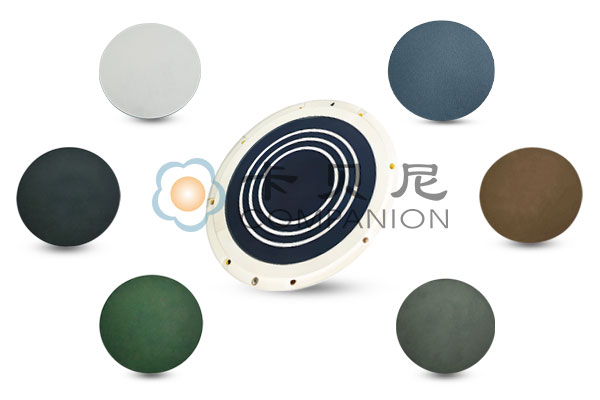 |
Porous ceramics are heterogeneous materials consisting of a solid skeletal phase and a pore phase.
(1) The skeletal material is typically made from high-performance ceramics such as alumina (Al₂O₃), silicon carbide (SiC), zirconia (ZrO₂) or silicon nitride (Si₃N₄), which determine the material's strength, temperature resistance and chemical stability.
(2) The pore structure forms a three-dimensional interconnected network, giving the material functions such as gas permeability, filtration, diffusion and adsorption. From a structural standpoint, the performance of porous ceramics is primarily influenced by: pore size, porosity, pore connectivity, pore wall thickness and surface condition.
Different combinations of these parameters allow porous ceramics to strike a balance between structural support and functionality.
Based on the pore size requirements in engineering applications, porous ceramics are generally divided into the following three categories:
(1) Micropores (<2 nm): Feature high specific surface area and are mainly used for molecular-level adsorption, specialty carriers and precision filtration.
(2) Mesopores (2–50 nm): Suitable for precision gas control, adsorption systems and auxiliary interfaces for specific chemical reactions.
(3) Macropores (>50 nm): Widely used in fluid diffusion plates, high-temperature thermal insulation and high-strength structural support components.
In practical engineering, Companion often employs a multi-level pore structure design to balance filtration efficiency with mechanical strength.
The performance of porous ceramics depends largely on pore structure design. The following three aspects are typically the focus:
(1) Pore Size Distribution: Pore size uniformity affects filtration precision and fluid resistance. Through well-controlled processing, a relatively stable pore size distribution can be achieved, and gradient structures can be tailored to application needs.
(2) Porosity Control: Porosity influences gas permeability and mechanical strength. Higher porosity helps improve fluid throughput, but the skeletal structure must be optimized to maintain overall strength and stability.
(3) Pore Connectivity: The degree of micropore interconnection determines fluid pathway efficiency. A well-designed micropore network helps reduce pressure loss and improve operational stability. Some structures combine pores of different scales to balance permeability and mechanical performance.
| Material | Chemical Formula | Key Properties | Typical Applications |
|---|---|---|---|
|
Al2O3 |
High strength, good electrical insulation, wear resistant |
Filtration systems, structural support |
|
|
SiC |
Low density, anti-static, corrosion resistant |
High-temperature filtration, gas distribution components |
|
|
Si3N4 |
Good thermal shock resistance and mechanical strength |
High-temperature cycling environments |
|
|
ZrO₂ |
High toughness, low thermal conductivity, impact resistant |
Precision mechanical support |
Companion currently focuses on alumina and silicon carbide systems for porous ceramic processing and application support.
(1) Pore-Forming Agent Method: Specific particles are volatilized during sintering to create a uniformly distributed, controllable micropore structure.
(2) Foaming Method: Produces high-porosity, low-density materials for thermal insulation and sound absorption.
(3) Freeze-Drying Method: Creates directionally aligned pore channels, suitable for precision gas diffusion.
(4) Sol-Gel Method: Produces nano-scale pores used for high-precision filtration and adsorption.
(5) Extrusion Molding: Fabricates regularly arranged honeycomb or tubular through-channel structures.
(1) Favorable thermal properties
(2) Good mechanical strength
(3) Excellent filtration and permeability
(4) Stable chemical performance
(5) Uniform adsorption characteristics
In electronic engineering equipment and advanced manufacturing, porous ceramics have become one of the key functional components for ensuring stable production operations.
(1) Porous Ceramic Vacuum Holding Systems
Utilizing uniform micron-scale micropores for full-surface holding, these systems effectively avoid the risk of localized marks associated with conventional mechanical clamping and help achieve high-flatness substrate holding.
(2) Gas Distribution and Diffusion Components
As critical flow-control components within equipment, porous ceramics with customized gradient pore structures help achieve uniform and stable gas flow distribution inside reaction chambers.
(3) High-Purity Fluid Filtration Elements
With their chemical inertness and high-temperature tolerance, these elements achieve deep purification of gases or liquids without introducing secondary contamination.
(4) Lightweight Precision Support Structures
Combining the high specific stiffness of ceramics with the weight-reducing properties of porous structures, these components provide stable support while improving equipment dynamic response.
Porous ceramics are not merely structural materials but advanced engineering materials that also deliver functionality. With their controllable pore structure, thermal stability and chemical resistance, they are playing an increasingly important role in electronic engineering, high-temperature filtration, energy systems and high-purity manufacturing environments.
If you are looking for a material solution to improve equipment stability or optimize process yield, please feel free to contact Companion. We are committed to delivering well-matched structural solutions for a range of industrial application scenarios.






 LANGUAGE
 WhatsApp