


Publish date: 2026-10-26
Cordierite ceramics are magnesium aluminum silicate materials known for low thermal expansion and good thermal shock resistance. They are used in applications such as kiln furniture, catalytic converter substrates and high-temperature filtration. Understanding how cordierite behaves under thermal cycling helps identify where it fits among technical ceramics and when an alternative material may be more suitable.
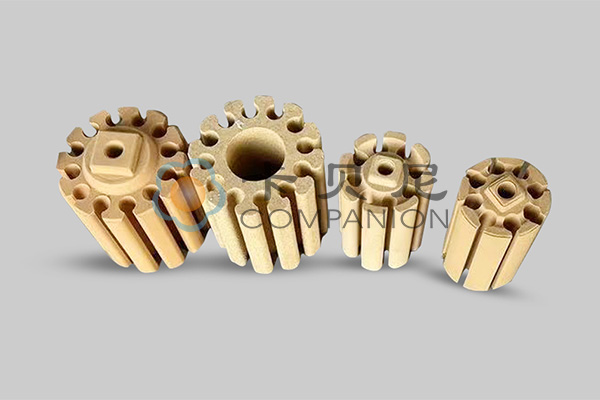 |
Cordierite is a silicate ceramic with the chemical formula 2MgO·2Al2O3·5SiO2. It occurs naturally as the mineral cordierite, but industrial cordierite ceramics are typically synthesized from talc, clay and alumina, or from high-purity oxide precursors. Components are most commonly formed by extrusion, dry pressing or slip casting, followed by sintering, typically between 1,300 °C and 1,450 °C depending on the grade and raw material system.
Cordierite has a distinctive feature: its thermal expansion varies with direction. It contracts along one direction when heated while expanding along the other two. These opposing effects result in low net expansion. This is the underlying reason cordierite has a lower coefficient of thermal expansion than alumina.
This structural feature influences how cordierite components respond to rapid heating and cooling. It also explains why the material is chosen for applications where dimensional stability during temperature changes matters more than high mechanical strength.
Thermal shock resistance is a material’s ability to withstand sudden temperature gradients without fracturing. Thermal shock failure in ceramics typically occurs when internal stresses caused by thermal expansion or contraction exceed the material’s fracture strength. For a given temperature difference, a lower coefficient of thermal expansion can reduce these stresses.
Cordierite’s coefficient of thermal expansion ranges from 1.0 × 10⁻⁶ to 2.5 × 10⁻⁶ /°C between room temperature and approximately 800 °C, depending on composition and porosity. By comparison, dense alumina ceramics typically range from 7 × 10⁻⁶ to 8.5 × 10⁻⁶ /°C over a similar temperature interval. This helps explain why a cordierite component can often withstand thermal changes that may cause an alumina component of the same geometry to fracture.
Other Relevant Properties
1. Service temperature: Dense grades typically have a service temperature range of approximately 1,100 °C to 1,250 °C. However, the upper end can be optimistic for continuous service, particularly under load; the appropriate limit depends on the grade and loading conditions. Limits for porous grades often arise from the application rather than material stability alone.
2. Flexural strength: Generally lower than alumina. Porous grades typically have strengths on the order of tens of MPa, depending on porosity. Dense grades are somewhat stronger, with actual values depending on microstructure and test method.
3. Porosity: Many cordierite components are deliberately made porous, with porosity ranging from approximately 10% to more than 40%, depending on the forming process and end use.
4. Thermal conductivity: Porous bodies generally have low thermal conductivity, which is relevant to insulation and filtration applications.
These values are for reference and are not universally applicable. Published data vary with grade, porosity, sintering conditions and test standards. Material selection should therefore rely on supplier data specific to the intended operating range.
 |
Cordierite’s combination of low thermal expansion, good refractoriness and controlled porosity supports several established industrial applications.
1. Kiln Furniture
Cordierite is widely used for kiln shelves, setter plates and support structures in ceramic firing. Kiln furniture undergoes repeated heating and cooling, with temperature changes often occurring rapidly during loading and unloading. Cordierite’s thermal shock resistance helps it withstand these cycles without the cracking that can affect ceramics less tolerant of thermal expansion. The trade-off is lower load-bearing capacity at high temperatures than materials such as silicon carbide or mullite.
2. Catalytic Converter Substrates
Automotive catalytic converters commonly use extruded cordierite honeycomb monoliths as catalyst substrates. Their thin-walled honeycomb structures must withstand rapid heating from ambient temperature to several hundred degrees Celsius during engine startup. Cordierite’s low coefficient of thermal expansion helps the monolith survive these thermal transients while the honeycomb provides a large surface area for the catalyst washcoat. The material’s porosity also helps the coating adhere.
3. Filtration and Particulate Control
Porous cordierite is used in diesel particulate filters and certain industrial hot-gas filtration applications. It can be extruded into honeycomb structures with alternately plugged channels, forcing gas to flow through the porous walls. Filter regeneration involves controlled high-temperature oxidation of trapped soot, making thermal shock resistance particularly important.
Other applications include electrical insulation components, heating element supports and certain burner components that require a combination of moderate temperature capability and resistance to thermal cycling.
Alumina and cordierite ceramics serve different roles in thermal systems. The choice depends on which performance requirement dominates the application.
Alumina offers higher mechanical strength, greater hardness, better wear resistance and a higher maximum service temperature, along with good electrical insulation. However, its higher coefficient of thermal expansion makes it more susceptible to thermal shock, particularly in constrained geometries or thick sections.
Cordierite offers good thermal shock resistance and low density, but lower strength and a lower maximum service temperature. A cordierite component capable of withstanding hundreds of rapid thermal cycles may still be unsuitable for a structural application combining high loads and high temperatures, where alumina may perform better.
Selection criteria for thermal cycling include:
• Rate of temperature change: Rapid transients favor cordierite.
• Mechanical loading: Higher static or dynamic loads favor alumina or other stronger ceramics.
• Geometry: Thin walls and complex shapes can make thermal stress considerations more important, favoring materials with low thermal expansion.
• Cost and manufacturability: Cordierite is generally easier than dense alumina to extrude into complex honeycomb shapes.
In some applications, the two materials are used together. For example, a cordierite support structure can carry an alumina component that needs thermal isolation or protection from thermal shock. Selection should therefore consider the full operating conditions rather than a single property comparison.
1. Component Forms
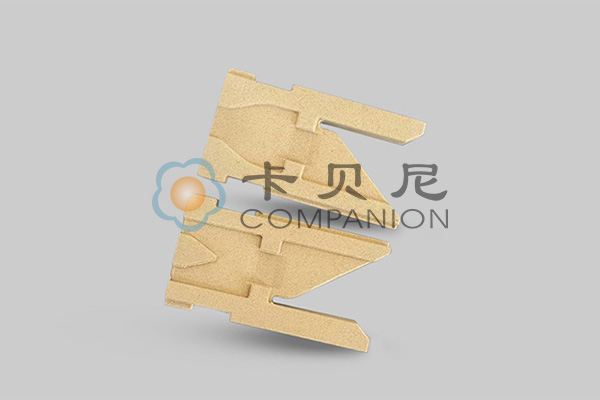
Cordierite components are commercially available in several standard forms, including extruded honeycombs, pressed plates and discs, cast shapes and machined parts. Achievable geometries depend largely on the forming route: extrusion suits honeycombs and tubular profiles with a consistent cross-section; dry pressing suits flat or moderately contoured components; and slip casting enables more complex shapes but may introduce greater dimensional variability.
2. Component Tolerances
Tolerances vary with the forming method and firing conditions. In general, as-fired dimensional tolerances for pressed components are often controlled as a percentage of the nominal dimension, while machined surfaces can achieve tighter tolerances. These are general guidelines rather than universal specifications. Porosity, sintering shrinkage and component geometry all influence achievable tolerances.
3. Ordering Considerations
When specifying custom cordierite components, the following information helps assess feasibility:
• Drawings or CAD models with nominal dimensions
• Required tolerances and critical features
• Porosity or density requirements
• Operating temperature range and thermal cycling profile
• Mechanical loading conditions
• Surface finish requirements
• Quantity and expected production volume
• Any chemical exposure or environmental constraints
Because cordierite grades differ in composition, porosity and thermal properties, a technically meaningful quotation requires more than a material name. Even the same nominal material can perform differently depending on how it is formed and sintered.
1. What Temperatures Can Cordierite Ceramics Withstand?
Dense cordierite grades can typically be used continuously at approximately 1,100 °C to 1,250 °C. A more conservative limit is advisable under load, based on the specific grade and manufacturer’s data. For porous grades, the limiting factor may be the application environment rather than the material itself.
2. Is Cordierite Stronger Than Alumina?
No. Alumina generally has higher flexural strength, hardness and wear resistance. Cordierite is selected for its thermal shock resistance and low thermal expansion rather than mechanical strength.
3. Can Cordierite Be Machined After Firing?
Yes. Cordierite can be machined with diamond tooling, but its porosity and relatively low strength require careful fixturing and conservative cutting conditions.
4. Why Is Cordierite Used in Catalytic Converters?
Cordierite’s low coefficient of thermal expansion helps extruded honeycomb monoliths withstand the rapid temperature changes that occur during engine startup and operation. Its porous surface also supports catalyst washcoat adhesion.
5. How Does Cordierite Differ from Mullite?
Mullite generally offers a higher maximum service temperature and better strength at elevated temperatures, but also higher thermal expansion. Cordierite provides better thermal shock resistance, while mullite is better suited to structural applications at higher temperatures.
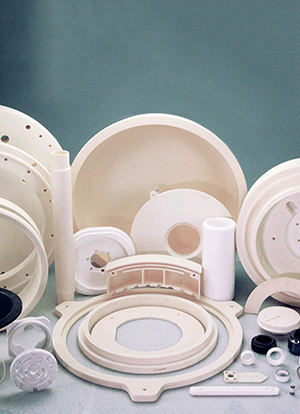
If you are evaluating advanced ceramic components for a specific application, contact Companion. As a provider of advanced material solutions, we supply structural ceramic components in materials such as alumina and aluminum nitride, together with precision machining, customization and surface treatment services. We also support the selection and supply of cordierite ceramic products for demanding electronics applications. Contact our advanced materials customization team to discuss a material solution tailored to your application requirements.






 LANGUAGE
 WhatsApp