


Publish date: 2026-10-08
Zirconia ceramics, also known as zirconium dioxide (ZrO2), are advanced ceramic materials widely used where mechanical reliability is critical, thanks to their combination of relatively high fracture toughness, good wear resistance and thermal stability. Unlike conventional oxide ceramics such as alumina, some zirconia materials undergo a stress-induced phase transformation that helps resist crack propagation. This toughening mechanism makes zirconia valuable in load-bearing applications such as precision components, cutting tools, medical implants and pump seals.
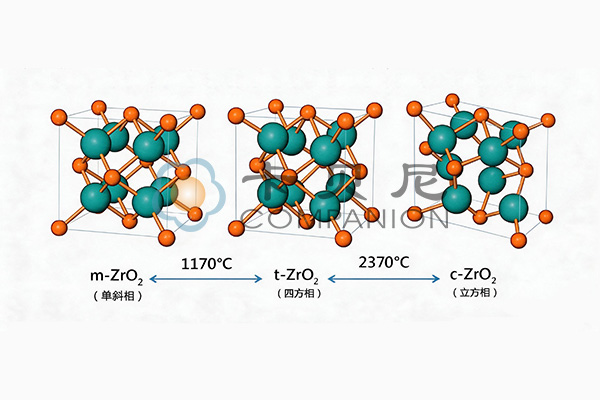
Zirconia ceramics are polycrystalline oxide materials based on zirconium dioxide. Pure zirconia has three crystal phases: monoclinic, tetragonal and cubic. The monoclinic-to-tetragonal transformation (m→t) during heating involves volume contraction, while the tetragonal-to-monoclinic transformation (t→m) during cooling involves volume expansion, which can cause unstabilized zirconia to crack. To retain the tetragonal or cubic phase at room temperature and control mechanical properties, manufacturers add stabilizing oxides such as yttria (Y2O3), ceria (CeO2) or magnesia (MgO).
How Transformation Toughening Works in Zirconia
A widely used structural zirconia is yttria-stabilized tetragonal zirconia polycrystal (Y-TZP), which can have a fine-grained microstructure containing metastable tetragonal grains at room temperature. As a crack tip advances, the local stress field triggers a tetragonal-to-monoclinic transformation in surrounding grains. The resulting volume expansion generates compressive stresses that help close the crack tip and increase the energy needed for further crack propagation. This stress-induced transformation toughening is a key distinction between zirconia and most other oxide ceramics.
 |
|
Transformation Toughening in Zirconia |
Densely sintered 3Y-TZP ceramics combine relatively high fracture toughness and flexural strength with a useful level of hardness at room temperature, providing a balanced set of mechanical properties.
These properties involve trade-offs. Zirconia generally offers greater toughness and impact resistance than alumina, but its hardness is usually lower than that of comparable dense alumina ceramics. This distinction is particularly important in wear applications: zirconia better withstands fracture and impact, while alumina often offers better resistance to abrasive wear under low-impact conditions.
Zirconia can also undergo low-temperature degradation in moist environments, as its tetragonal phase gradually transforms into the monoclinic phase. Over time, this can reduce mechanical strength. Selecting an appropriate grade and stabilizer content can help reduce this risk.
Different stabilization systems determine zirconia’s phase composition at room temperature, which in turn influences its mechanical and functional properties. Material selection starts with identifying the main failure mechanism or functional requirement—brittle fracture, impact, wear or high-temperature ionic conduction—alongside the operating temperature range and cost constraints. Common grades are outlined below:
• 3Y-TZP (3 mol% yttria-stabilized tetragonal zirconia polycrystal): A common structural grade with relatively high flexural strength and good fracture toughness. Applications include precision components, dental implants and pump seals. Improper processing can increase susceptibility to low-temperature degradation.
• 8Y-FSZ (8 mol% yttria fully stabilized zirconia): Consists almost entirely of the cubic phase at room temperature and does not exhibit transformation toughening. Its strength and toughness are lower than those of 3Y-TZP, but it offers high ionic conductivity at elevated temperatures. Applications include oxygen sensors, solid oxide fuel cell electrolytes and thermal barrier coatings.
• Ce-TZP (ceria-stabilized tetragonal zirconia polycrystal): Offers higher fracture toughness but lower strength and hardness than 3Y-TZP, along with better resistance to low-temperature degradation. It is suitable for wear components exposed to impact.
• ZTA (zirconia-toughened alumina): A composite consisting of an alumina matrix with a smaller proportion of zirconia particles. It combines alumina’s hardness with increased toughness from zirconia transformation. It costs less than pure zirconia and is commonly used for cutting tools and wear liners.
Precision Components
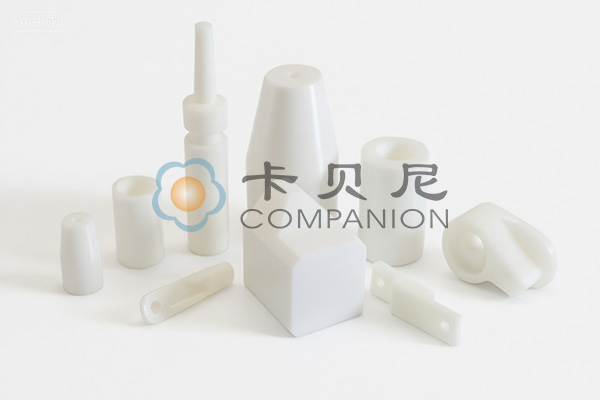
In metrology, electronic engineering equipment and fluid handling, zirconia ceramics are used for gauge blocks, bearing balls, valve seats and nozzles. Their elastic modulus and thermal expansion behavior contribute to dimensional stability as temperatures change. The material can be ground and polished to a submicron surface finish, which is important for sealing and sliding interfaces.
 |
|
Precision Zirconia Components |
Cutting Tools
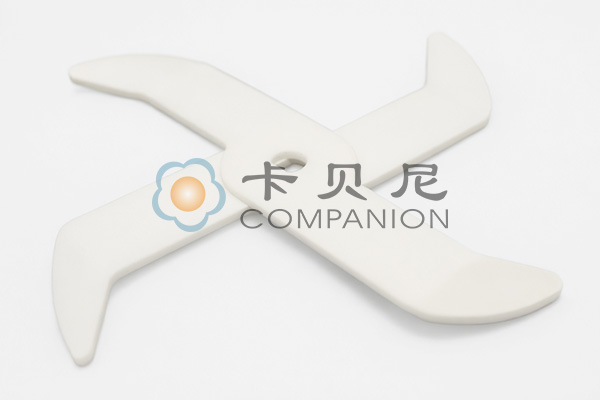
Ceramic cutting inserts made from zirconia-toughened alumina (ZTA) or yttria-stabilized zirconia (Y-TZP) are used to machine hardened steels and high-temperature alloys. Compared with conventional alumina inserts, zirconia’s higher fracture toughness reduces edge chipping, allowing higher feed rates in interrupted cutting. However, zirconia-based ceramics have lower hardness than alumina, limiting their use in continuous high-speed turning of very hard materials, where cubic boron nitride or alumina may be preferred.
 |
|
Zirconia Ceramic Knife |
Medical Implants
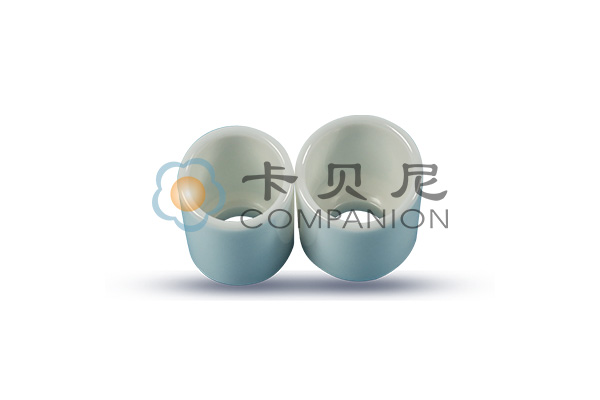
Yttria-stabilized zirconia has been used for hip joint heads and dental crowns because of its biocompatibility, wear resistance and high strength. Its smooth surface can reduce the generation of wear debris in articulating joint components. However, concerns about long-term hydrothermal aging have led some applications to shift toward alumina-toughened zirconia (ATZ) or ZTA composites.
 |
|
Zirconia Ceramic Uterine Manipulator Cup |
Pump Seals
Zirconia can be used for certain mechanical seal faces, valve seats and wear-resistant bushings. Under suitable operating conditions, its wear resistance, crack resistance and corrosion resistance can help extend component life. In chemical processing and water treatment, for example, zirconia seal faces can resist attack from many acids and alkalis. Their fracture resistance can also help prevent sudden fracture caused by thermal shock or pressure surges.
 |
|
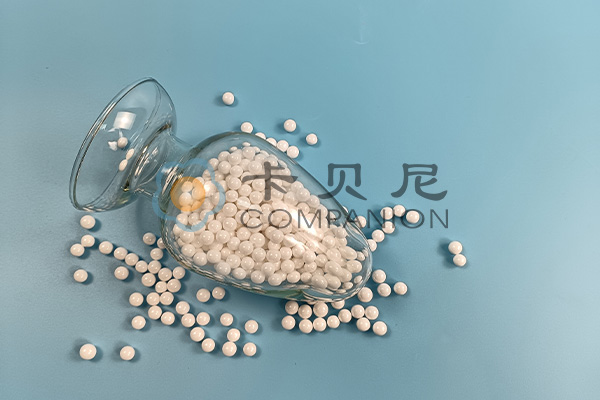
Zirconia Ceramic Ball |
Alumina ceramics (Al2O3) are widely used advanced ceramics offering lower cost, high hardness and good electrical insulation; zirconia ceramics offer higher fracture toughness and flexural strength, but at a higher material and processing cost. The choice depends on the component’s actual failure mechanism.
| Property | 3Y-TZP Zirconia | High-Purity Alumina |
| Fracture Toughness | Higher | Lower |
| Flexural Strength | Higher | Typically lower for conventional grades |
| Hardness | Lower | Higher |
| Elastic Modulus | Lower | Higher |
| Coefficient of Thermal Expansion | Higher | Lower |
| Density | Higher | Lower |
| Material and Finished Component Cost | Higher | Lower |
*This table provides a general comparison of common dense 3Y-TZP and high-purity alumina. It does not cover every formulation or processing condition.
• Choose zirconia ceramics when: Components experience impact loads, thermal shock or tensile stress; crack propagation is the main failure risk; or a smooth, wear-resistant surface must withstand occasional overloads.
• Choose alumina ceramics when: Abrasive erosion under low-impact conditions is the main wear mechanism, high hardness matters more than toughness, or cost is the main constraint and the component is not subject to bending or tensile stress.
Cost differences arise from more than powder prices. Forming methods, sintering processes, the amount of post-sintering machining, tolerances, surface requirements, production volume and yield also affect cost, so a fixed price ratio is not a reliable guide. For equipment with high downtime costs, zirconia components may offer a cost advantage through longer service life and less frequent replacement, even when their purchase price is higher. Purchasing decisions should consider initial cost, expected service life and the consequences of failure together.
When sourcing custom zirconia components, evaluate material requirements, manufacturing capabilities and actual operating conditions together, rather than comparing quotations alone.
• Forming and machining capabilities: Can the supplier offer processes such as dry pressing, cold isostatic pressing (CIP) and ceramic injection molding (CIM)? Can it supply components in the as-sintered condition where drawings allow, or provide precision grinding and polishing for mating surfaces?
• Quality control and traceability: Zirconia properties are highly sensitive to sintered density and grain size, so suppliers need rigorous quality control. A qualified supplier should also have coordinate measuring or optical inspection equipment and provide dimensional inspection reports with shipments to support consistency across production batches.
• Engineering experience and DFM support: Assess whether the supplier has experience selecting materials for similar conditions, such as impact, strong acids or alkalis, and high temperatures. Can it provide design for manufacturability (DFM) advice during quotation to identify features that are difficult or expensive to machine?
• Prototyping and responsiveness: Can the supplier quickly review drawings and produce small prototype batches to help you complete assembly and operating-condition validation early in the project?
Selecting and customizing zirconia ceramic components requires balancing performance, manufacturability and cost. Contact Companion to discuss your application requirements. Based on your component design and operating conditions, we can recommend material selection and machining approaches to help you make a suitable choice.






 LANGUAGE
 WhatsApp